





Education has evolved more in the last decade than it did in the previous several decades. What was once limited to physical classrooms is now available from almost anywhere with an internet connection. Students can attend lectures from top universities, earn industry-recognized certifications, complete entire degree programs, and interact with instructors without leaving home.
At the same time, traditional classroom education remains a preferred choice for millions of learners because it offers structured learning, face-to-face interaction, practical experiences, and a focused academic environment.
This has created one of the most common questions among students, parents, and working professionals:
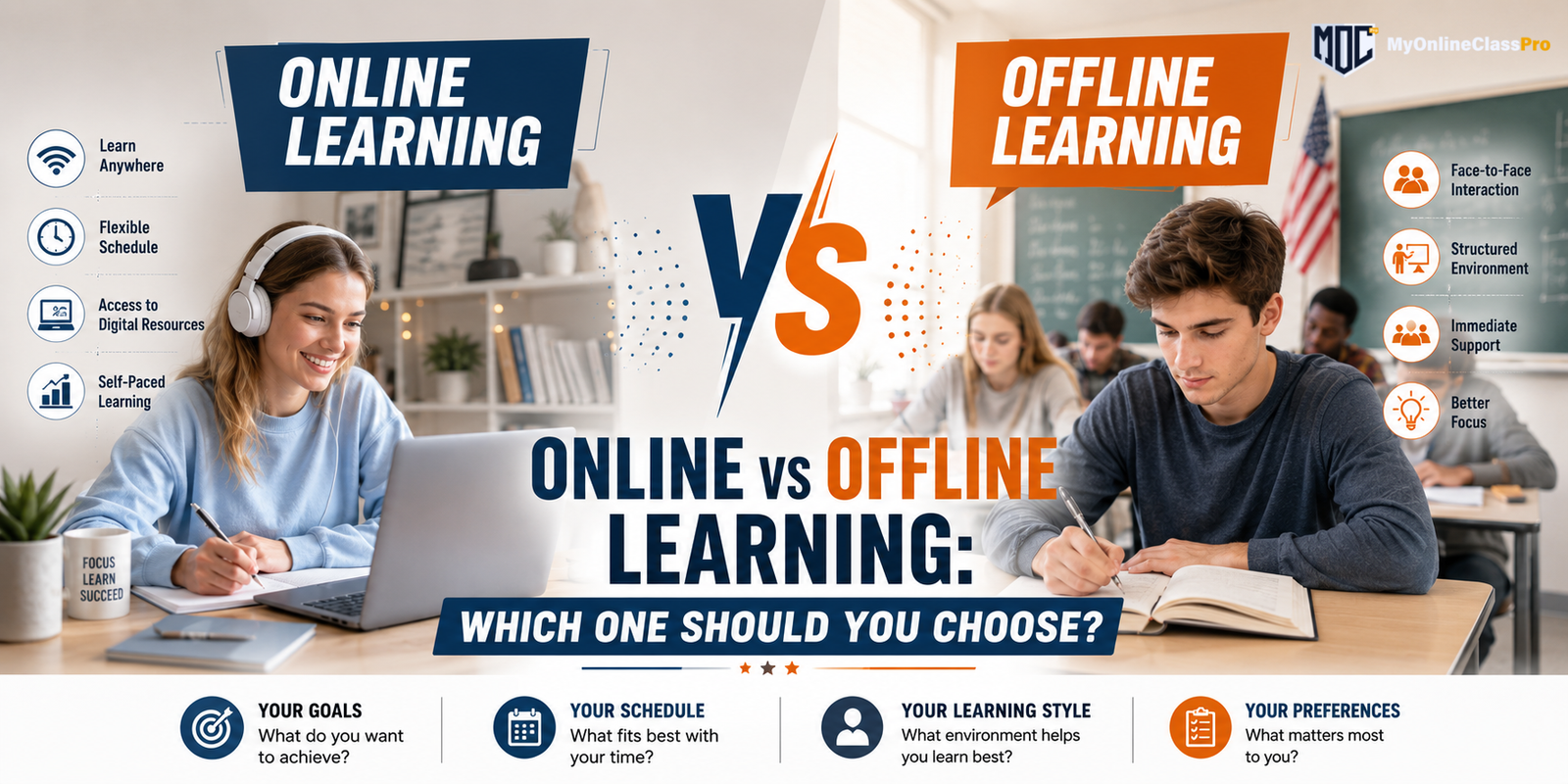
Should you choose online learning or offline learning?
The answer isn’t the same for everyone. The right choice depends on your goals, learning style, schedule, budget, and career aspirations.
In this comprehensive guide by MyOnlineClassPro, we’ll compare online vs offline learning across every important factor, including flexibility, costs, interaction, learning outcomes, employer perception, technology, and career opportunities, so you can make an informed decision.
What Is Online Learning?
Online learning is a method of education where courses are delivered through the internet instead of a physical classroom.
Students access lectures using laptops, tablets, or smartphones. Classes may be conducted live through video conferencing or offered as pre-recorded lessons that students can watch at their convenience.
Modern online education often includes:
- Live virtual classes
- Recorded video lectures
- Digital assignments
- Online quizzes and exams
- Discussion forums
- Interactive learning platforms
- AI-powered personalized learning
- Virtual labs and simulations
Online learning is widely used by universities, colleges, certification providers, corporations, and training institutes around the world.
What Is Offline Learning?
Offline learning refers to traditional classroom education where students attend classes in person.
Students interact directly with teachers, participate in classroom discussions, complete practical activities, and collaborate with classmates.
Traditional education generally includes:
- Face-to-face lectures
- Classroom discussions
- Laboratory sessions
- Group activities
- Physical examinations
- Campus facilities
- Libraries
- Extracurricular activities
Offline education continues to be the standard learning method for schools and many higher education institutions.
Also Read: Can Someone Take My Online Class for Me? Find Out Why Students Look for Online Class Help
Online vs Offline Learning: Quick Comparison
| Feature | Online Learning | Offline Learning |
|---|---|---|
| Flexibility | Excellent | Limited |
| Learning Schedule | Self-paced or live | Fixed timetable |
| Cost | Usually lower | Usually higher |
| Travel Required | No | Yes |
| Classroom Interaction | Virtual | Face-to-face |
| Practical Learning | Limited in some subjects | Excellent |
| Networking | Online communities | Strong in-person networking |
| Technology Requirement | High | Low |
| Self-Discipline Needed | Very high | Moderate |
| Learning Environment | Anywhere | Campus/Classroom |
Advantages of Online Learning
1. Learn From Anywhere
Perhaps the biggest advantage of online learning is location independence.
Students can study:
- From home
- While traveling
- During internships
- While working full-time
- From another country
This flexibility makes education accessible to people who previously had limited opportunities.
2. Flexible Scheduling
Unlike traditional classrooms, many online courses allow students to learn whenever it fits their schedule.
This is particularly valuable for:
- Working professionals
- Parents
- Freelancers
- International students
- Students preparing for competitive exams
Instead of adjusting your life around your classes, online education allows your education to fit into your lifestyle.
3. Lower Overall Costs
Online education often costs less than traditional classroom learning because students save money on:
- Transportation
- Accommodation
- Campus fees
- Printed textbooks
- Daily meals
- Parking
Many online certification programs are available at a fraction of the cost of comparable in-person courses.
4. Access to Global Experts
Online platforms remove geographical barriers.
A student in Texas can learn from an instructor in California, while another student in Australia can attend the same class without relocating.
This access expands learning opportunities and exposes students to diverse perspectives.
5. Personalized Learning
Many virtual learning platforms now use artificial intelligence to personalize education.
Students receive:
- Customized practice questions
- Learning recommendations
- Performance analytics
- Adaptive assessments
- Individual progress tracking
Personalized learning helps students focus on areas where they need the most improvement. However, despite these advanced tools, some learners still struggle to keep up with demanding coursework, especially in subjects like mathematics. Tight deadlines, full-time jobs, or multiple academic commitments often lead students to search for solutions such as “take my online math class for me“ when they need additional academic support to stay on track. While personalized learning can significantly improve outcomes, consistent study habits and timely assistance remain essential for long-term success.
Advantages of Offline Learning
1. Better Face-to-Face Interaction
Traditional classrooms encourage real-time discussions between teachers and students.
Students can:
- Ask immediate questions
- Receive instant clarification
- Participate in debates
- Engage in collaborative activities
Many learners retain information better through direct interaction.
2. Structured Learning Environment
Offline education follows a consistent schedule.
This structure helps students:
- Stay disciplined
- Avoid procrastination
- Develop study routines
- Complete coursework on time
Students who struggle with self-motivation often perform better in structured classroom settings.
3. Practical Hands-On Experience
Certain disciplines require physical practice.
Examples include:
- Nursing
- Medicine
- Engineering
- Chemistry
- Architecture
- Automotive technology
Laboratories, workshops, and clinical training are difficult to replicate entirely through online learning.
4. Stronger Social Development
Classroom education naturally develops interpersonal skills.
Students learn:
- Teamwork
- Leadership
- Public speaking
- Conflict resolution
- Communication
These soft skills are valuable in almost every career.
5. Campus Experience
Many students value the overall college experience, including:
- Student clubs
- Sports
- Cultural events
- Networking opportunities
- Career fairs
- Mentorship programs
These experiences contribute to personal growth beyond academics.
Disadvantages of Online Learning
Although online education offers many benefits, it also presents several challenges.
Self-Discipline Is Essential
Without regular classroom attendance, some students struggle to stay motivated.
Common problems include:
- Missing assignment deadlines
- Procrastination
- Low engagement
- Poor time management
Limited Practical Training
Subjects requiring laboratory work or clinical practice may not provide the same hands-on experience online.
Technology Issues
Students depend heavily on:
- Reliable internet
- Updated devices
- Learning software
- Digital literacy
Technical problems can interrupt learning.
Reduced Social Interaction
Virtual classrooms cannot fully replace spontaneous conversations, campus friendships, and in-person collaboration.
Some students experience isolation during long online programs.
Disadvantages of Offline Learning
Traditional education also has limitations.
Less Flexibility
Students must follow fixed schedules regardless of personal commitments.
This can be challenging for working professionals or parents.
Higher Expenses
Offline education often includes additional costs such as:
- Transportation
- Housing
- Campus fees
- Printed materials
- Food
These expenses can significantly increase the total cost of education.
Geographic Limitations
Students may need to relocate to attend prestigious institutions, increasing both financial and personal commitments.
Fixed Pace
Classroom instruction usually progresses at the same speed for everyone.
Fast learners may become bored, while others may need more time to understand complex concepts.
Online Learning vs Offline Learning: Detailed Comparison
Flexibility
Online learning clearly wins in flexibility.
Students decide:
- When to study
- Where to study
- How quickly can lessons be completed
Offline learning follows a predetermined schedule.
Winner: Online Learning
Student Engagement
Offline classrooms generally provide stronger engagement through direct communication and immediate feedback.
Winner: Offline Learning
Cost
Online education is usually more affordable because it eliminates many indirect expenses.
Winner: Online Learning
Networking
Face-to-face interactions naturally create stronger professional and personal relationships.
Campus networking often leads to internships and job opportunities.
Winner: Offline Learning
Learning Independence
Online students develop valuable skills including:
- Self-management
- Accountability
- Independent research
- Digital communication
These abilities are increasingly valued by employers.
Winner: Online Learning
Practical Skills
Traditional education remains superior for courses requiring physical practice.
Winner: Offline Learning
Which Learning Style Fits You?
Choose online learning if you:
- Work full-time
- Need flexible scheduling
- Live far from educational institutions
- Prefer self-paced learning
- Want to reduce educational costs
- Are comfortable using technology
Choose offline learning if you:
- Prefer direct interaction
- Need hands-on laboratory work
- Learn better through classroom discussions
- Want the full campus experience
- Need external motivation
Employer Perspective: Does Online Learning Have the Same Value?
Years ago, employers sometimes viewed online education with skepticism. Today, that perception has changed significantly.
Many employers now evaluate candidates based on:
- Skills
- Practical experience
- Certifications
- Portfolios
- Problem-solving ability
Rather than focusing solely on how education was delivered.
However, the credibility of the institution still matters. Degrees and certifications from accredited universities and recognized training providers generally carry more weight than those from unknown organizations.
Employers also appreciate candidates who demonstrate self-discipline, adaptability, and digital collaboration, skills often developed through online learning.
Can Online Learning Replace Traditional Education?
Not entirely. Online education excels in accessibility and flexibility, but traditional classrooms continue to offer advantages in practical training, social interaction, and structured learning.
Rather than replacing one another, both methods increasingly complement each other.
Many universities now use hybrid learning, combining online lectures with in-person workshops, labs, and discussions. This approach gives students the flexibility of digital learning while preserving the benefits of face-to-face education.
Read More: How Online Class Help Services Reduce Academic Stress and Improve Performance
Tips for Succeeding in Online Learning
If you choose online education, these strategies can improve your chances of success:
- Create a dedicated study space free from distractions.
- Set a consistent study schedule each week.
- Break large assignments into smaller tasks.
- Participate actively in live classes and discussion forums.
- Review recorded lectures regularly.
- Minimize distractions by turning off unnecessary notifications.
- Use digital planners or calendar apps to track deadlines.
- Stay connected with classmates and instructors for support.
Developing strong study habits is just as important as choosing the right learning format.
Final Thoughts
There is no universal answer to the online vs offline learning debate because each approach serves different needs.
If flexibility, affordability, and learning at your own pace are your priorities, online learning can be an excellent choice. It allows students and professionals to balance education with work and personal responsibilities while accessing courses from institutions around the world.
If you value face-to-face interaction, structured schedules, practical training, and the traditional campus experience, offline learning remains a strong option, particularly for disciplines that require hands-on instruction.
Ultimately, the best learning method is the one that aligns with your goals, preferred learning style, and career ambitions. As education continues to evolve, hybrid models that combine the strengths of both online and offline learning are becoming increasingly popular, offering learners the best of both worlds.
Frequently Asked Questions
Is online learning easier than offline learning?
Not necessarily. While online courses offer greater flexibility, they often require stronger self-discipline, time management, and independent learning skills. The academic standards can be just as rigorous as traditional classroom programs.
Which is better for career growth: online or offline learning?
Both can support career growth when the program is high quality and recognized. Online learning is ideal for gaining new skills while working, whereas offline learning may provide stronger networking opportunities and hands-on training in certain fields.
Is online education recognized by employers?
Yes. Many employers accept online degrees and certifications from accredited institutions. They are increasingly focused on a candidate’s skills, experience, and demonstrated ability rather than the learning format alone.
Which is more affordable?
Online learning is generally more affordable because it reduces costs related to commuting, housing, campus facilities, and printed materials. However, tuition varies depending on the institution and program.
What is hybrid learning?
Hybrid learning combines online instruction with in-person classes. Students complete some coursework remotely while attending campus for practical sessions, discussions, or assessments. This model offers both flexibility and direct interaction.